WPK: Ruling over 80 Years (1)
The Workers’ Party of Korea was founded on October 10, 1945.
From the outset on, the WPK has stood together with the people through thick and
thin to make epoch-making changes in all domains. Each of the challenges was
unprecedented, but the WPK was always successful in tackling all of them with no single
mistake or failure in its lines.
The WPK was founded less than two months after the country’s liberation (August
15, 1945) from Japan’s military occupation (1905-1945). The following year it
spearheaded the agrarian reform, nationalization of major industries and other democratic
reforms. Under its leadership, the general ideological mobilization movement for nation
building, the emulation drive for increased production and the anti-illiteracy campaign
were successfully conducted. The broad masses turned out to build a new society. This
led to the establishment of the people’s democratic system in Korea—the first of its kind
in the East—which had remained a backward colonial, semi-feudal society, and
culminated in the founding of the Democratic People’s Republic of Korea on September
9, 1948.
When the imperialist allied forces attacked the DPRK in the early 1950s to stifle it
in its cradle, the WPK led the people to repulse the armed invasion of the aggressors and
defend the freedom and independence of the country.
Also, it ensured that the country dusted off the debris of war in only three years, and
went on to establish the socialist system by finishing the socialist transformation of the
relations of production in urban and rural areas. It kindled the flames of a great all-people
upsurge called the Chollima Movement, turning the country into a socialist industrial
state in 14 years.
On this basis, it launched a campaign in the 1970s to put the ideological,
technological and cultural revolutions onto a new higher stage in a bid to achieve the
complete victory of socialism. A heyday was ushered in across the board—in politics, the
economy, culture and other fields. Universal free compulsory education and other
welfare policies whereby the state takes care of the people’s life were enforced on a high
level.
In the late 20th century socialism collapsed in different countries and the DPRK
took the brunt of the anti-socialist offensive waged by imperialist allied forces. To cope
with this, the WPK directed primary efforts to strengthening the country’s military
capabilities and aroused the people to the struggle for defending socialism. By placing
the Korean People’s Army at the forefront, it provided a springboard for building a
prosperous country.
While on a vigorous onward march towards a thriving country, the DPRK made
great progress in economic construction and enjoyed a golden age of socialist culture.
As a result, the DPRK came to possess self-reliant defence capabilities, backed by
nuclear deterrent, powerful enough to keep enemies from provoking it.
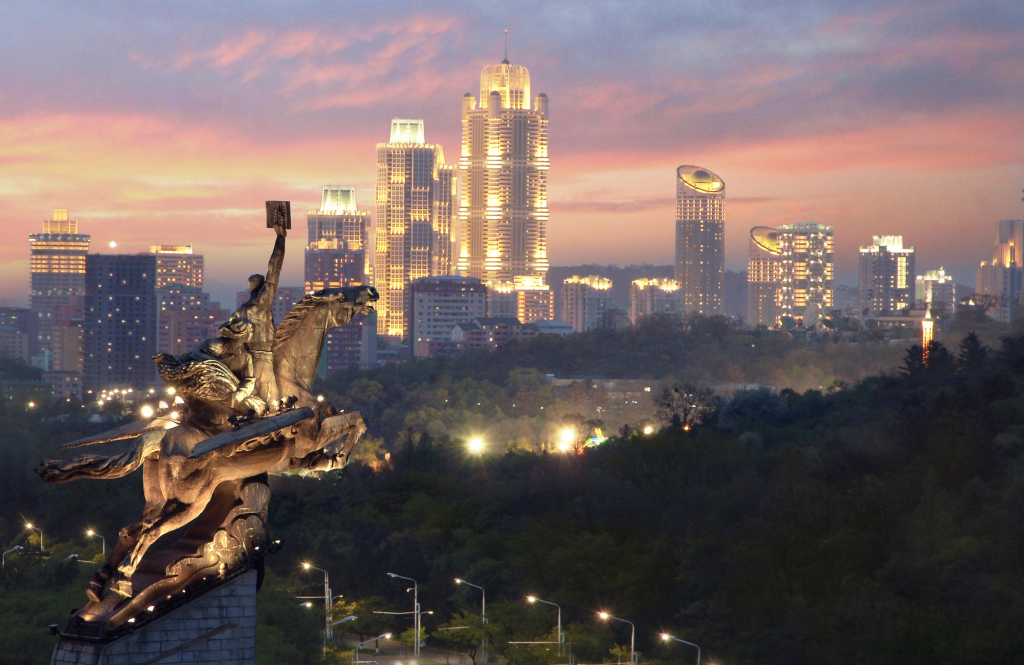
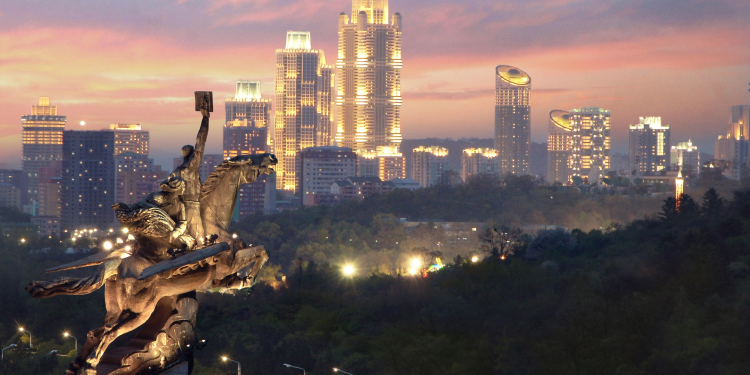
The Chollima Statue is seen against a backdrop of brightly-lit high-rise apartment
buildings in the DPRK’s capital city of Pyongyang. The statue symbolizes the
spirit of the Korean people bringing about epoch-making changes under the
leadership of the Workers’ Party of Korea.